
Secure your DeFi portfolio with Ledger Web3 Hardware Wallet and keep your digital assets safe from online threats. Decentralized finance offers high returns, but it also brings big risks. Hackers target hot wallets and exchange accounts every day. Using a hardware wallet gives you cold storage protection. Ledger devices keep private keys offline, so no one can steal them remotely. This guide explains how to lock down your DeFi funds using Ledger products. You will learn about models, setup steps, and security features. Whether you trade on Uniswap or stake on Aave, a Ledger wallet adds a layer of safety. Buy Ledger DeFi bundles to get started quickly. Read on to find the best wallet for DeFi strategies.
Why DeFi Investors Are Moving to Cold Storage
DeFi investors face rising threats from phishing sites, smart contract bugs, and keyloggers. Hot wallets connected to the internet expose funds to constant attacks. Cold storage removes this risk by keeping private keys offline. A hardware wallet like Ledger acts as a physical barrier. Even if your computer is infected, your coins stay safe. This shift toward cold storage is not a trend. It is a necessary step for anyone serious about yield farming or lending. Many users now pair a Ledger with MetaMask for extra safety. This combination gives you the convenience of a browser wallet with hardware-level security.
Risks of Hot Wallets in DeFi
Hot wallets store private keys online. That makes them vulnerable to malware and remote attacks. Phishing links can trick you into signing malicious transactions. Without a hardware wallet, one wrong click can drain your entire portfolio. Cold storage eliminates these attack vectors.
How Ledger Devices Keep Keys Offline
Ledger devices use a secure chip to generate and store private keys. The chip never exposes the key to your computer. Every transaction must be physically confirmed on the device screen. This process is known as “secure element” technology. It is the same tech used in passports and credit cards.
Understanding Ledger for DeFi Security
Ledger for DeFi security starts with its hardware design. The Nano S, Nano X, and Stax models all use the same secure element. Each device supports over 5,500 coins and tokens. You can manage Ethereum, Solana, Polygon, and many other chains. Ledger Live app helps you install apps and check balances. For DeFi users, the most important feature is transaction verification. You see every transaction detail on the screen before signing. This prevents blind signing of malicious contracts. Using Ledger for DeFi means you never approve a transaction you cannot see.
Supported Chains and Tokens
Ledger supports Ethereum, BSC, Avalanche, and all major EVM chains. It also works with Solana, Polkadot, and Cosmos. You can store ERC-20, BEP-20, and SPL tokens. The list grows every month with new firmware updates.
Transaction Verification Process
When you connect to a DeFi app, the transaction appears on the Ledger screen. You scroll through the details and confirm with the physical button. This step ensures you approve exactly what you intend. No hidden contract calls can pass through.
Ledger Live and DeFi Management
Ledger Live does not directly interact with DeFi protocols. But it lets you install the right apps, update firmware, and check balances. You then use third-party wallets like MetaMask or Rabby to connect to dApps. The Ledger device signs the transactions offline.
How a Web3 Hardware Wallet Protects Your Assets
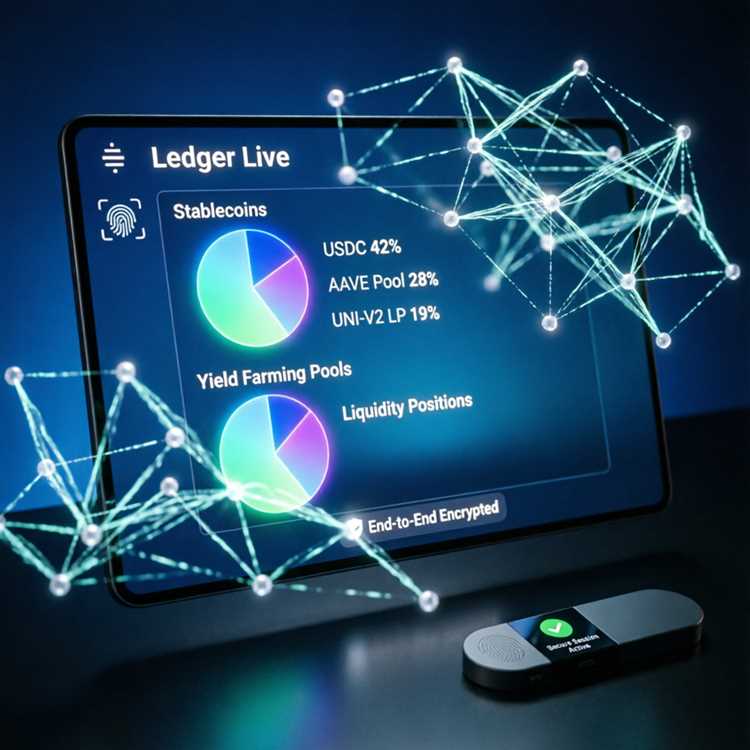
A Web3 Hardware Wallet like Ledger works as a standalone signing device. It does not have any software that can be hacked remotely. The device communicates with your computer only through a USB or Bluetooth connection. All sensitive data stays inside the secure chip. This design protects against malware, keyloggers, and even physical theft if you use a strong PIN. Ledger devices also support passphrases for extra security. A passphrase is a 25th word that creates a hidden wallet. Even if someone steals your device, they cannot access the passphrase-protected funds. For DeFi users, this is a powerful tool to separate different portfolios.
Secure Element and BOLOS Operating System
Ledger uses a custom operating system called BOLOS. It runs on top of a secure element chip. This chip is certified at the highest security level (CC EAL5+). The OS isolates each app so that one app cannot read another app’s data.
Bluetooth and USB Connectivity
Nano X and Stax support Bluetooth. This allows you to use the device with a smartphone. Nano S Plus uses only USB. All connections are encrypted. The device never exposes the private key over any wireless channel.
Comparing Ledger Models for Yield Farming Security
Yield farming security depends on the hardware you choose. Ledger offers three main models: Nano S Plus, Nano X, and Stax. Each has different storage capacity, battery life, and screen size. For beginners, the Nano S Plus is a Entry Level Hardware Wallet that supports up to 100 apps. The Nano X holds up to 100 apps as well but has Bluetooth and a larger battery. Stax is the premium model with an E Ink touchscreen and curved design. It can store up to 100 apps too. All models support the same security features. The difference is convenience and form factor. Choose based on how often you need to sign transactions.
Nano S Plus vs Nano X vs Stax
Nano S Plus costs $79 and has a USB-only connection. Nano X costs $149 and adds Bluetooth. Stax costs $279 and features a full-color touchscreen. All three support over 5,500 coins. Stax is designed for users who want a Luxury Crypto Storage experience.
What Model Suits Active Yield Farmers
Active yield farmers interact with multiple protocols daily. A Nano X or Stax with Bluetooth makes signing transactions faster. You do not need to plug in the device each time. The screen also shows more details, helping you verify complex transactions.
Connecting Ledger Metamask for DeFi Transactions
Using Ledger Metamask integration is the most common way to access DeFi apps. MetaMask acts as the interface, while Ledger signs the transactions. To set up, you install the Ethereum app on your Ledger device. Then in MetaMask, you select “Connect Hardware Wallet” and choose Ledger. Once connected, you see your Ledger addresses in MetaMask. You can then interact with any dApp on Ethereum, BSC, Polygon, or other EVM chains. The transaction will prompt you to confirm on the Ledger screen. This method keeps your private keys off the computer. It is the recommended way to use DeFi safely.
Step-by-Step Setup Guide
First, install the Ethereum app on your Ledger via Ledger Live. Second, open MetaMask and click “Connect Hardware Wallet” in the settings. Third, select “Ledger” and choose the correct derivation path. Fourth, confirm the connection on your Ledger device. Now you can use any dApp with hardware-level security.
Supported Third-Party Wallets
Besides MetaMask, Ledger works with Rabby, Frame, and Brave Wallet. Each wallet offers a similar connection process. Some wallets like Rabby provide better transaction simulation. This helps you see what the transaction will do before signing.
Choosing the Best Wallet for DeFi Activities
The best wallet for DeFi activities combines security and usability. Ledger devices are the top choice because they are non-custodial and offline. However, you also need a software wallet to interact with dApps. Many users pair Ledger with MetaMask, but other options exist. Rabby Wallet offers built-in simulation and risk alerts. Frame Wallet is a desktop-first wallet with a clean interface. For mobile users, the Ledger Live app lets you connect through WalletConnect. This allows you to use Ledger with any dApp that supports WalletConnect. The key is to never use a software wallet alone for large amounts. Always pair it with a hardware wallet.
Features to Look For in a DeFi Wallet
Look for support for multiple chains, transaction simulation, and hardware wallet integration. Also check for open-source code and regular audits. Ledger devices meet all these criteria. The software wallet should also allow custom RPCs for private networks.
Why Ledger Stands Out
Ledger has sold over 6 million devices. It is the most trusted brand in hardware wallets. The company offers a Ledger Warranty and a Crypto Recovery service for lost seed phrases. No other hardware wallet provides this level of support.
Steps to Buy Ledger DeFi Bundle
To buy Ledger DeFi bundle, visit the official Ledger store. Choose between Nano S Plus, Nano X, or Stax. Add the device to your cart. You can also purchase a pack with a Ledger Nano X and a protective case. Prices start at $79 for the Nano S Plus. Shipping is free for orders over $100. Ledger accepts credit cards, PayPal, and cryptocurrency. After purchase, you receive a tracking number. Delivery takes about 5 to 10 business days. Always buy directly from the official store to avoid tampered devices.
Step-by-Step Purchase Process
- Go to the official Ledger website and select “Hardware Wallets”.
- Choose your model. For DeFi, the Nano X is a good balance of price and features.
- Click “Add to Cart” and proceed to checkout.
- Enter your shipping address and payment method.
- Confirm the order. You will receive an email confirmation.
What Comes in the Box
Each Ledger device includes the hardware, a USB cable, a recovery sheet, and a keychain strap. The Nano X also includes a charging cable. No battery charger is needed for the Nano S Plus. Stax includes a curved glass screen and a leather back plate.
Managing Crypto Activity Storage with Ledger Suite
Ledger Suite is the desktop software that manages your ledger suite and device. It allows you to install and uninstall apps, update firmware, and check balances. For crypto activity storage, you need to keep track of your transaction history. Ledger Suite shows a list of all transactions sent and received. However, it does not store your private keys. The keys remain on the device. To manage multiple portfolios, you can use different seed phrases or passphrases. Each Ledger device can hold one seed phrase at a time, but you can add a passphrase to create a separate wallet. This is useful for separating DeFi funds from long-term holdings.
Using Ledger Live for Portfolio Tracking
Ledger Live supports over 5,500 coins and tokens. You can add accounts for each asset. The app syncs with the blockchain to show your balances. It also provides a portfolio overview with price charts. You can set up notifications for price changes.
Backup and Recovery Options
Write down your 24-word recovery phrase on the provided card. Store it in a safe place, like a fireproof safe. Never store it digitally. If you lose your device, you can restore everything on a new Ledger using the same phrase. Ledger also offers a Crypto Recovery paid service for an extra layer of backup.
Advanced Protection for Your DeFi Portfolio
Secure your DeFi portfolio with Ledger Web3 Hardware Wallet to get advanced protection. Beyond basic cold storage, you can enable passphrase, set up a hidden wallet, and use a dedicated PIN for each wallet. Ledger devices also support FIDO2 for two-factor authentication. This means you can use your Ledger as a hardware security key for exchanges and email accounts. For DeFi users, the most important advanced feature is the ability to sign transactions without exposing the seed. Combine this with a Secure Storage Wallet and you get a fortress for your funds. Consider upgrading to a Advanced Protection model like the Stax for its larger screen and better transaction preview.
Setting Up a Passphrase
Go to the Ledger device settings and choose “Passphrase”. Enter a temporary word or phrase. This creates a new wallet that is separate from your main wallet. To access it, you need to enter the passphrase each time. This is ideal for storing high-value DeFi positions.
Using Ledger as a FIDO2 Key
Connect your Ledger to a computer and open the FIDO2 app. Register it on sites like Google, GitHub, or Binance. Now you can use the physical button to approve login attempts. This prevents phishing attacks that steal passwords.
Frequently Asked Questions About Ledger for DeFi
This section answers common questions about using Ledger for DeFi security.
Can I use Ledger with all DeFi protocols?
Ledger works with any EVM-compatible protocol through MetaMask or Rabby. For non-EVM chains like Solana, you need the Solana app on Ledger and a compatible wallet like Phantom.
Does Ledger support yield farming directly?
No, Ledger does not farm yields directly. You connect it to a dApp that handles the farming. The Ledger signs the deposit and withdrawal transactions.
What happens if I lose my Ledger device?
You can recover your funds using the 24-word recovery phrase on a new Ledger device. Keep the phrase offline and secure. If you also lose the phrase, your funds are gone.
Is Ledger safe for staking?
Yes, you can stake coins like Ethereum, Solana, and Tezos through Ledger Live. The staking rewards go directly to your wallet. Your private keys never leave the device.
How do I update the firmware on my Ledger?
Open Ledger Live, connect your device, and go to “Device Manager”. If an update is available, click “Update firmware”. Follow the on-screen instructions. The device will reset, but your funds are safe with the recovery phrase.
Comparison Table: Ledger Models for DeFi
| Model | Price | Connection | Screen | Battery | App Capacity |
|---|---|---|---|---|---|
| Nano S Plus | $79 | USB-C | OLED 128x64 | None (USB powered) | Up to 100 |
| Nano X | $149 | USB-C, Bluetooth | OLED 128x64 | 8 hours | Up to 100 |
| Stax | $279 | USB-C, Bluetooth | E Ink 672x200 | 3 weeks | Up to 100 |
For a complete list of accessories, check the ledger wallet store. Each device includes a USB cable and recovery sheet. Additional accessories like leather cases, cables, and standalone chargers are sold separately. Use a case to protect your Ledger during travel. The wireless charger works only with Stax. All accessories are compatible with the specific model they are designed for.
By following the steps in this guide, you can secure your DeFi portfolio with Ledger Web3 Hardware Wallet. The combination of cold storage, transaction verification, and passphrase protection gives you peace of mind. Start with a Entry Level Hardware Wallet and upgrade as your needs grow. Remember to always back up your recovery phrase and never share it. Your DeFi journey deserves the best protection.